
Spacing
Use each plant page's mature width and suggested spacing. Closer planting fills faster but increases competition and maintenance.
Shape the spaces in your garden
Plan hedges and screens with confidence, choosing the right size, spacing and care for your garden.
← Back to Planting & CareSouthern Plants™ puts care into its labels to help you choose a suitable home for each plant.
Compare the mature height, width and growing preferences on your Southern Plants labels before planning a row. Check any variety-specific spacing guidance in the plant profile. Choose a plant that suits the finished hedge size, and check soil and sun along the entire boundary.
Find your plant’s growing information →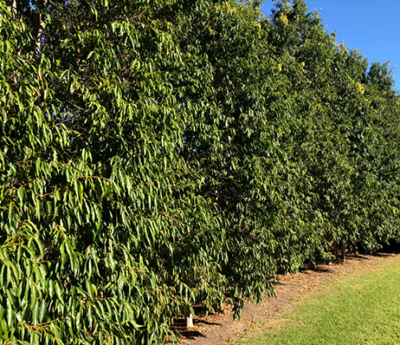
Purposeful planting
Use each plant page's mature width and suggested spacing. Closer planting fills faster but increases competition and maintenance.
For dense hedges, begin light pruning while plants are young and trim the sides as well as the top. Avoid letting the top become much wider than the base.
Prepare the whole area, remove weeds and use staggered spacing for even coverage. Keep foot traffic away while plants establish.
A low edge around a path, a clipped formal hedge and a tall informal screen need different growth habits. Decide the height, thickness and level of maintenance you want. Consider whether you need foliage year-round and whether flowers or wildlife value are also priorities.
Mark the proposed line and check access to gates, paths, meters and services. Allow enough setback for mature width and for pruning, rather than planting directly against a fence. Use the variety’s recommended spacing; close planting may fill sooner but also increases competition.
Remove competing weeds and improve the planting strip where appropriate. Check for changes in soil and drainage along its length. Water every root ball during establishment, including plants at the far end of an irrigation line, and investigate slow-growing gaps before adding fertiliser.
Light formative trimming can encourage branching in suitable hedge plants. Keep the base at least as wide as the top so lower foliage receives light. Timing and pruning severity vary: some plants do not recover well from cuts into old, leafless wood. Inspect for active nests before trimming.
Groundcovers also benefit from preparing the whole bed and checking mature spread. Keep weeds down while gaps fill, and leave planned stepping points instead of walking across young plants.
A hedge may cross several growing conditions: one end could sit under an eave while the other receives runoff. Check each root ball during establishment and make sure every irrigation outlet works. A single gap is a reason to investigate the local conditions before replacing the plant.
For taller clipped hedges, keep the top slightly narrower than the base so light reaches lower foliage. Use gentle, regular shaping where the variety responds well, rather than allowing excessive growth and then cutting back severely. Keep enough room beside the hedge to inspect and maintain it safely from the ground.
You do not need to know everything at once. Start with your plant’s growing requirements, try the steps that suit your garden, and build confidence as you see what works.
Open Plant Finder